AudioQuest Record Brush Antistatic Carbon Plate Brush Review (2026)
Updated September 20, 2026 · Research-based review
Our verdict
This AudioQuest carbon fiber brush uses over a million conductive fibers and a grounded metal grip to lift dust and drain static before a record plays. It costs more than generic carbon brushes and only handles dry dust, so records with ground-in grime still need a wet cleaning method.
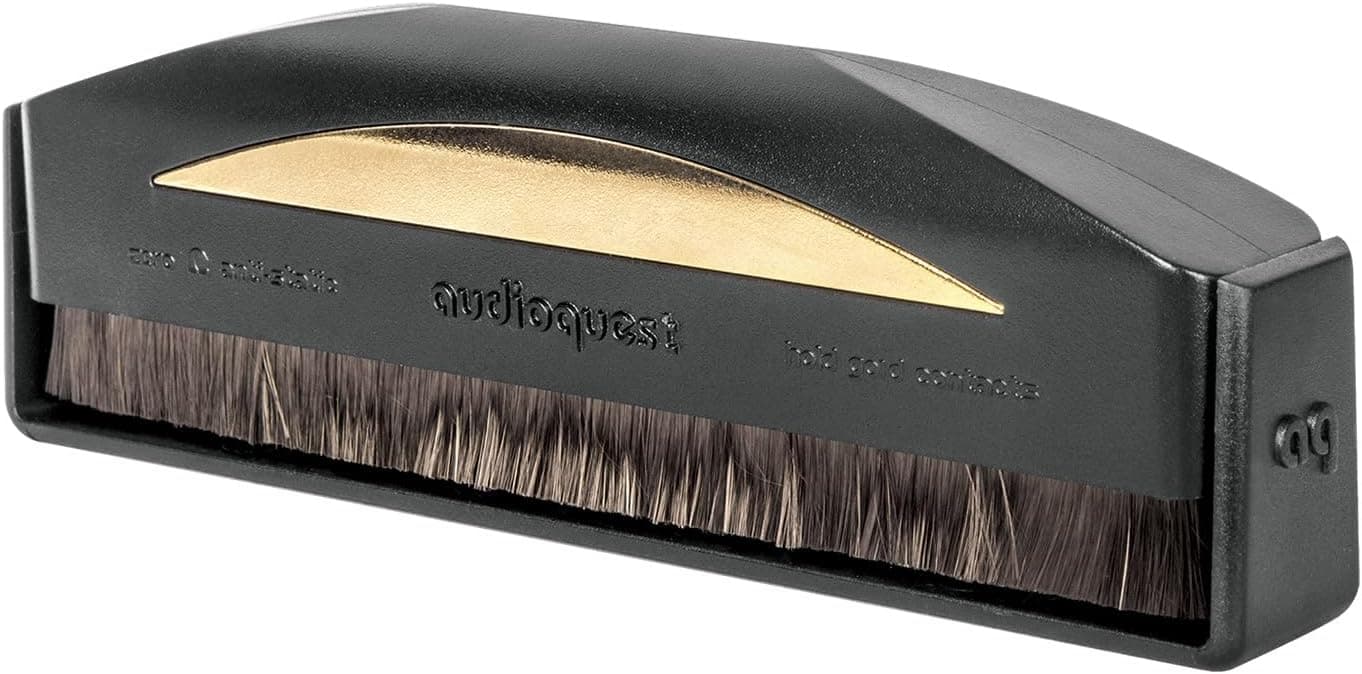
AudioQuest antistatic carbon plate record brush, a premium carbon fiber brush for dust removal and static control.
Price range: See on Amazon
What we liked
- + Dense carbon fibers sweep dust from deep in the grooves
- + Conductive design drains static as you brush
- + AudioQuest build quality lasts for years of use
Trade-offs
- - Priced higher than generic carbon brushes
- - Dry brush only, so wet cleaning is still needed for dirty records
Who the AudioQuest Record Brush is built for
This brush targets a vinyl listener who wants a quick, effective pre-play ritual to remove surface dust and static before dropping the needle, rather than a deep-cleaning solution for genuinely dirty secondhand records. Because it channels static into the user's hand through a metal grip, it suits anyone bothered by the crackle and pop that static buildup causes, especially in dry climates or centrally heated rooms where static is worse. It fits a listener who already owns a reasonable turntable and cartridge and wants to protect that investment, since dust in the grooves accelerates stylus wear over time. It is a poor match for anyone expecting a single brush to substitute for an actual wet record-cleaning process on heavily soiled records.
What is under the hood
This model uses roughly 1,116,000 conductive carbon fibers arranged in two rows along the brush head, each row electrically connected to a metal strip running the length of the body so the fibers, strip, and handle form one continuous conductive path. An uncoated metal finger grip completes that path, allowing static charge picked up from the record surface to discharge safely through the user's hand rather than building up on the vinyl. A rotating protective cover doubles as a cleaning mechanism, wiping collected dust and debris off the carbon fibers each time it closes over the brush head. This design sits within AudioQuest's broader record brush lineup, which also includes Silver and Gold tiers using different fiber counts at different price points.
Setup and living with it
Using the brush is simple: hold the record steady as it spins on the platter, or hold the brush against a stationary disc and rotate the record by hand, letting the carbon fibers reach into the grooves rather than just skimming the surface. Keeping a finger on the uncoated metal grip is what actually completes the grounding path, so a light, consistent hold matters more than pressure against the vinyl. Close the rotating cover after each use to let it clean accumulated dust from the fibers, keeping the brush effective over repeated sessions rather than redistributing old dust onto the next record. This is a dry-cleaning tool only, so records with actual grime, mold release residue, or old dried plasticizer still need a wet cleaning method or dedicated cleaning machine first.
How it compares with rival anti-static brushes
In the anti-static-brushes ranking here, this AudioQuest brush places first of eight, ahead of the Discwasher RDCFBZ and Spin-Clean carbon fiber brushes, both of which trail by a noticeable margin. It also outranks bundled options like the Kitosun brush set with cleaner fluid and the Record-Happy brush and solution kit, suggesting the single-purpose, higher fiber-count design here outperforms bundles that pair a lower-spec brush with a cleaning liquid. The gap to these rivals likely reflects AudioQuest's higher fiber density and the grounded metal-grip design, which several of the lower-ranked competitors either simplify or omit entirely.
Bottom line
Choose this AudioQuest brush if you want an effective, durable dry cleaning and anti-static tool to use before every play, and you are willing to pay more than a generic carbon fiber brush for the grounded design and self-cleaning cover. It scores 8.9 out of 10 here, with a perfect fit for the job reflecting how directly it solves the dust and static problem it targets. If budget is the priority, a simpler brush like the Discwasher RDCFBZ still handles basic dust removal at a lower cost. For records that are visibly dirty rather than just dusty, pair this brush with an actual wet cleaning solution or machine rather than expecting it to do that heavier job alone.
Frequently asked questions
Does the AudioQuest Record Brush remove static from records?
Yes, its conductive carbon fibers and grounded metal grip discharge static through the user's hand while brushing.
How many carbon fibers does this AudioQuest brush have?
This model uses approximately 1,116,000 conductive carbon fibers arranged in two rows along the brush head.
Can this brush clean heavily dirty or grimy records?
No, it is a dry dust and static removal tool; records with real grime or residue still need a wet cleaning method first.
How do I keep the brush itself clean?
A rotating protective cover wipes accumulated dust from the carbon fibers each time it is closed over the brush head.
Prices change often, so check the current price and availability on Amazon.
Check price on AmazonTurntable Nest may earn a commission from the link above.