Pioneer DJ PLX-CRSS12 Direct Drive Turntable with DVS Control, Black Review (2026)
Updated September 14, 2026 · Research-based review
Our verdict
The Pioneer DJ PLX-CRSS12 is a direct drive turntable built for DJs who want to scratch digital files without timecode vinyl, using a tone-arm-free system with Serato and rekordbox. It shares its motor and chassis with the PLX-1000, but the premium price only makes sense if you actually use the DVS side, not just play records.
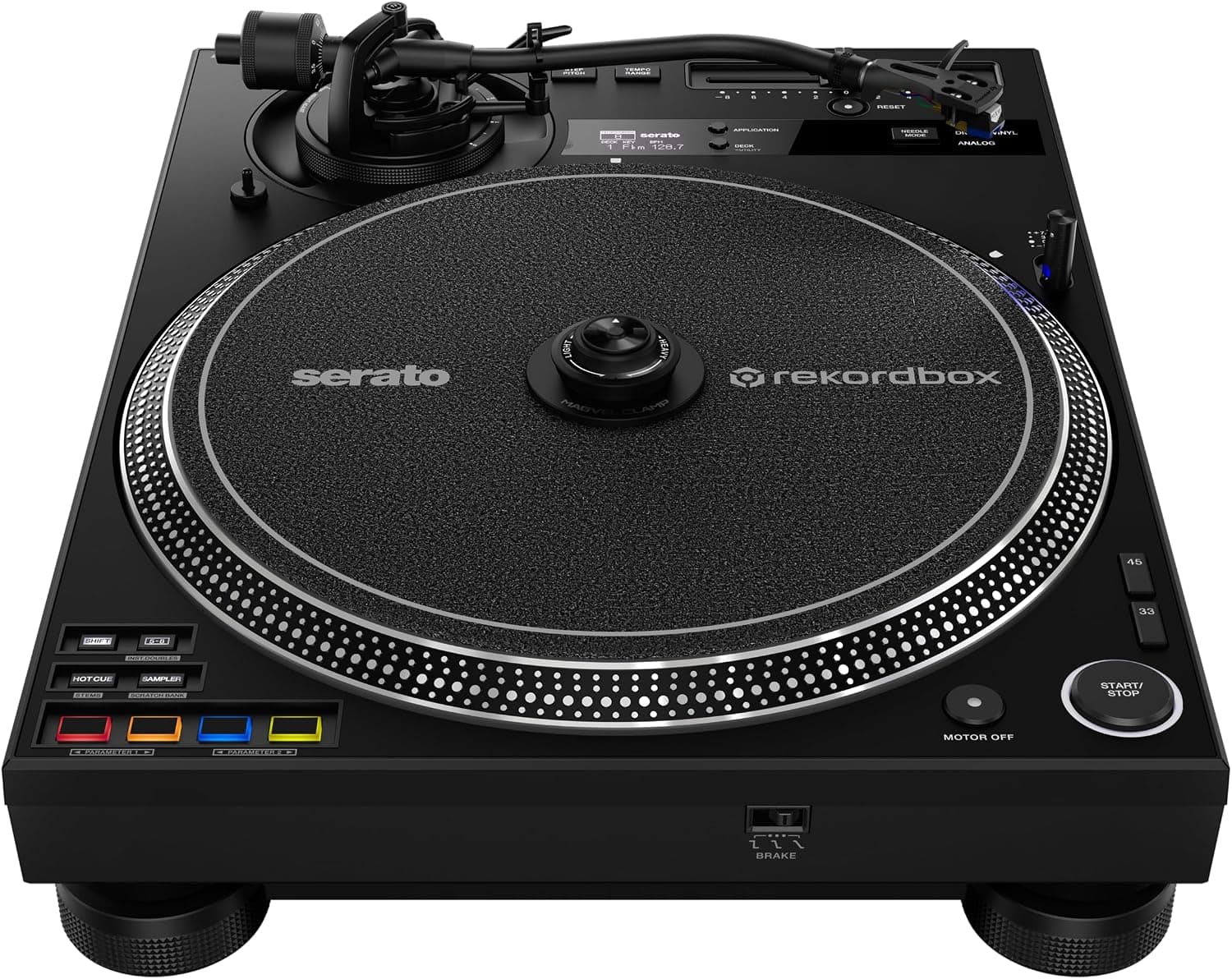
Pioneer DJ PLX-CRSS12 direct drive turntable with DVS control, a hybrid deck for DJs mixing both vinyl and digital files.
Price range: See on Amazon
What we liked
- + DVS control is built in, so you can scratch digital files without timecode vinyl
- + Direct drive motor delivers the fast, firm response scratch DJs need
- + Pioneer DJ ecosystem makes pairing with their mixers and software easy
Trade-offs
- - DVS features need compatible software and mixer setup to use fully
- - Premium pricing is hard to justify if you only play records at home
Who this hybrid turntable is for
The PLX-CRSS12 targets DJs who already scratch or battle on club-standard direct drive turntables and want to add digital vinyl control without carrying timecode records to every gig. Pioneer built it around a tone-arm-free system, so instead of a needle riding a groove, a Magvel Clamp grips the record and reads its rotation to control a digital file in Serato DJ Pro or rekordbox on a connected computer. That means the turntable still looks and feels like a standard analog deck, but it can switch into Digital Vinyl mode for software-based mixing when paired with a compatible mixer. It is a specialist tool for a DJ who wants one turntable to cover both analog records and digital DVS work rather than owning separate setups for each.
Specs and DVS features explained
Pioneer built the PLX-CRSS12 on the same motor, chassis and vibration-damping zinc casting as its PLX-1000 club standard, so the direct drive feel and start-up torque match a deck DJs already trust. The turntable includes four MIDI-mappable performance pads, an OLED display, and three selectable brake speeds, plus adjustable torque settings in the utility menu so scratch feel can be tuned to preference. In Digital Vinyl mode the tone-arm-free system means the needle never actually skips during hard scratching, since there is no physical groove being tracked. It weighs about 26.9 pounds and measures roughly 17.8 by 13.9 by 6.3 inches, in line with other professional direct drive decks, and DVS control requires Serato DJ Pro or rekordbox software plus a mixer that supports that software's DVS function.
Setting it up and using it day to day
For analog record playback, the PLX-CRSS12 works like any direct drive turntable, needing a standard cartridge setup and a phono-capable mixer or preamp input. Unlocking the DVS side means connecting the turntable to a laptop running Serato or rekordbox and to a mixer with DVS support, then using the Magvel Clamp on the platter in place of a conventional tonearm during Digital Vinyl mode. Because the deck shares its core mechanics with the PLX-1000, day-to-day care such as belt-free direct drive maintenance and platter cleaning follows the same routine as that club deck. DJs moving between analog sets and DVS sets within one night will want to practice the mode switch before relying on it live, since it changes how the turntable behaves.
Trade-offs and how it compares
Against the Audio-Technica AT-LP140XP or AT-LP120XUSB, both straightforward direct drive decks without DVS, the PLX-CRSS12 costs considerably more, and that premium only pays off if the DVS control is actually used regularly rather than sitting unused. Compared with Pioneer's own PLX-500, which offers USB recording but no tone-arm-free DVS, the CRSS12 is a step up specifically for scratch DJs working digital files. Gemini's TT-4000 and TT-5000 are cheaper direct drive alternatives with their own USB and preamp features, worth a look for DJs who do not need Pioneer's specific DVS ecosystem. Buyers who only spin physical records at home get little benefit from paying for hardware built around a feature they will not use.
Verdict and who should pick something else
The PLX-CRSS12 earns our score of 9.2 out of 10 as a genuinely capable hybrid deck for DJs who scratch both vinyl and digital files and want one turntable instead of two separate rigs. It suits performers already invested in Serato or rekordbox who want tone-arm-free DVS without carrying timecode records. Home listeners or hobbyist DJs who only play physical records should look at a standard direct drive turntable like the AT-LP120XUSB or Pioneer's own PLX-500 for a lower price and simpler operation. Anyone not planning to use DVS software regularly is paying for a feature set built for club and battle DJs rather than home listening.
Frequently asked questions
Do I need timecode vinyl to use the PLX-CRSS12's DVS features?
No, the tone-arm-free system uses a Magvel Clamp to read the record's rotation, so it controls digital files in Serato DJ Pro or rekordbox without timecode vinyl.
Can the PLX-CRSS12 skip during hard scratching in Digital Vinyl mode?
Pioneer states that because there is no tonearm tracking a physical groove in Digital Vinyl mode, the needle skipping that happens on conventional turntables does not occur.
What software works with the PLX-CRSS12?
It is compatible with Serato DJ Pro and rekordbox, and requires a mixer that supports the DVS function of whichever software you use.
Is the PLX-CRSS12 good for someone who only plays vinyl records?
It can play standard records like any direct drive turntable, but its price premium is built around the DVS features, so a simpler deck is better value if you will not use them.
Prices change often, so check the current price and availability on Amazon.
Check price on AmazonTurntable Nest may earn a commission from the link above.