Ortofon MC X40 Moving Coil Phono Cartridge with Nude Shibata Stylus and Boron Cantilever Review (2026)
Updated September 14, 2026 · Research-based review
Our verdict
Ortofon's flagship X series cartridge pairs a nude Shibata stylus with a boron cantilever for detail retrieval that belongs on a genuinely high-end turntable. It is priced and built for a system that can show off what it does, not a casual upgrade for an entry level deck.
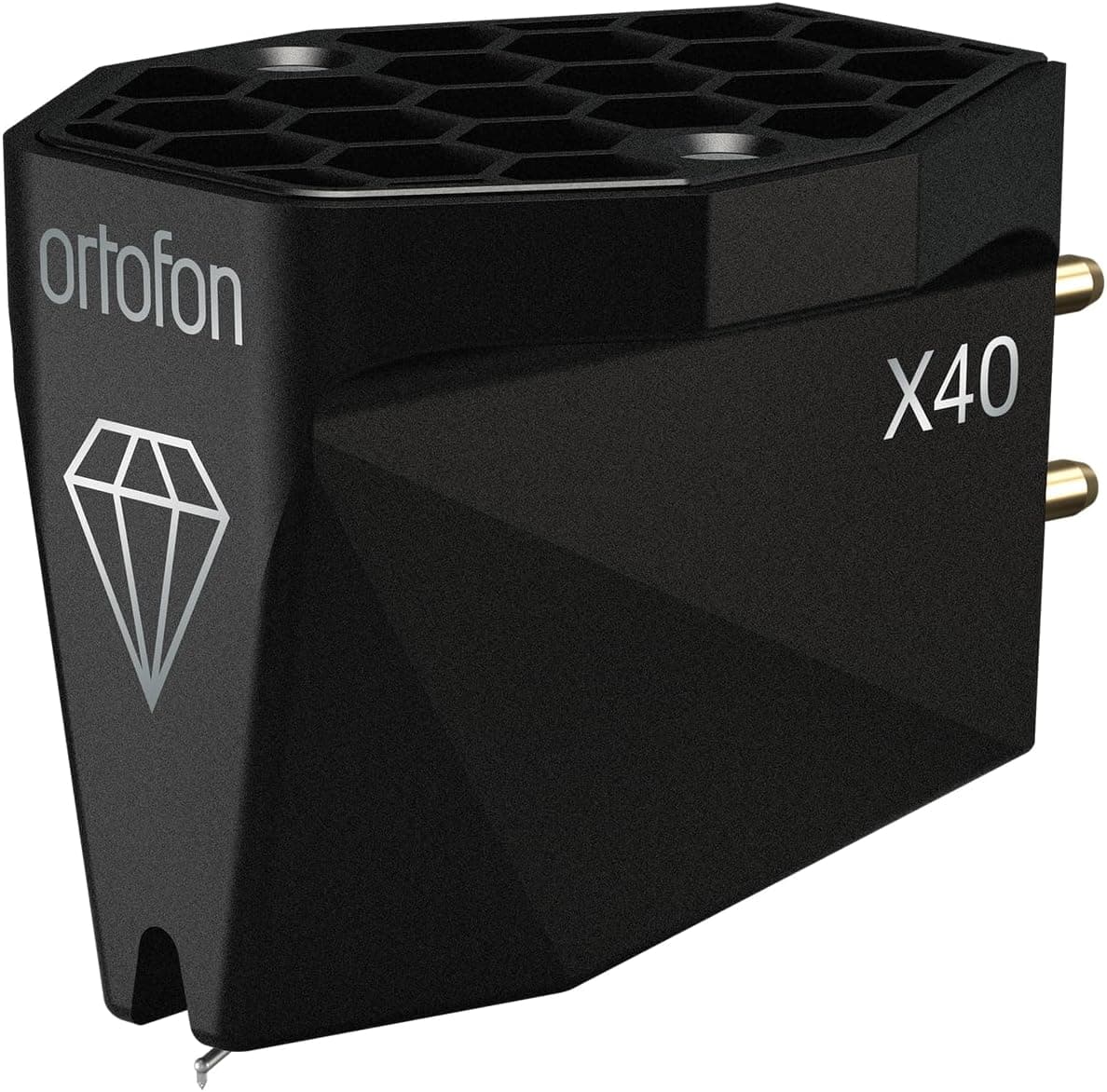
Ortofon MC X40 moving coil cartridge with a nude Shibata stylus and boron cantilever, the top of the X series.
Price range: See on Amazon
What we liked
- + Boron cantilever is stiff and light for exceptional detail retrieval
- + Nude Shibata stylus traces fine groove modulations accurately
- + Top-tier X series model suits serious high-end turntables
Trade-offs
- - High price makes it an investment for already refined systems
- - Shibata and boron combination needs meticulous setup
Who this cartridge is for
The MC X40 sits at the top of Ortofon's MC X range, and it is built for an owner with a turntable, tonearm and phono stage already capable of resolving fine detail, since a moving coil cartridge at this level only shows its strengths on equipment that can keep up. It suits a listener chasing the last increments of clarity and soundstage width from an already refined vinyl system, rather than someone looking for a general upgrade on a modest turntable. Because it is a moving coil design, it also needs a phono stage with an MC input or a suitable step-up transformer, unlike simpler moving magnet cartridges that work with almost any phono input.
What makes it the top of the line
According to Ortofon, the MC X40 uses a nude Shibata diamond stylus mounted on a boron cantilever, a combination chosen for stiffness and low mass that helps the stylus track fine groove modulations accurately. The cartridge body uses a honeycomb structured stainless steel frame built with Metal Injection Molding, paired with custom rubber dampers, and the coils are wound with high purity silver wire feeding a newly engineered magnet system. Output voltage is rated at 0.4 millivolts with a recommended tracking force around 2.0 grams and a weight of 8.6 grams, specifications that place it firmly in serious high-end cartridge territory rather than an entry level moving coil.
Setting it up and getting the best from it
Because the stylus and cantilever assembly is a nude Shibata design rather than a bonded stylus, careful alignment matters more here than with a forgiving conical or elliptical tip, so using a proper alignment protractor and checking tracking force with a scale is worth the extra time. The cartridge needs a phono stage set up for moving coil loading rather than the standard moving magnet input found on many basic amplifiers, so confirm your system supports MC cartridges, either through a dedicated MC input or a step-up device, before ordering. Reviewers have noted a smooth, detailed and open character once properly set up, consistent with Ortofon's positioning of the X40 as the flagship of the series.
How it compares with other high-end cartridges
Stepping down within Ortofon's own range, the MC X20 uses a nude elliptical stylus rather than Shibata and costs less, while still sharing the same general frame and magnet design philosophy. A Sumiko Blue Point No. 3 offers a high output moving coil alternative that works with standard MM phono inputs, avoiding the need for a dedicated MC stage, though it does not match the X40's stylus profile or cantilever material. A Clearaudio Concept cartridge competes at a similar level with its own tuning philosophy. Among these, the X40 stands out specifically for the boron and Shibata combination, which is less common at this price point.
Bottom line
This is a genuine flagship cartridge, and its score of 9.4 out of 10 reflects excellent marks across fit, features and build, tempered only by a value score that acknowledges the premium asked for a boron cantilever and nude Shibata stylus. Choose it if your turntable, tonearm and phono stage are already capable of resolving what this cartridge can deliver, and if you have the patience for careful alignment. Skip it if your system uses a basic moving magnet only phono stage, or if you are not yet ready to invest at this level in a single component.
Frequently asked questions
Does the MC X40 need a special phono stage?
Yes, as a moving coil cartridge it needs a phono stage with MC input support or a step-up transformer, since it will not work correctly with a standard MM only input.
What stylus and cantilever does it use?
It uses a nude Shibata diamond stylus mounted on a boron cantilever, a combination chosen for stiffness, low mass and detailed groove tracing.
How does the X40 differ from the X20 in the same series?
The X40 uses a nude Shibata stylus while the X20 uses a nude elliptical stylus, with the X40 sitting above it as the flagship model in Ortofon's X series.
What tracking force should I use?
Ortofon recommends a tracking force of around 2.0 grams, and it is worth confirming with a scale after mounting the cartridge.
Prices change often, so check the current price and availability on Amazon.
Check price on AmazonTurntable Nest may earn a commission from the link above.