Ortofon 2M Blue Moving Magnet Phono Cartridge Review (2026)
Updated September 21, 2026 · Research-based review
Our verdict
The 2M Blue shares its body with the entry-level 2M Red but swaps in a nude elliptical stylus, the upgrade that pulls out more detail and a more open sound from the same mounting hardware. It costs more than the Red for that refinement, and the gain is easiest to hear on a turntable that can resolve it.
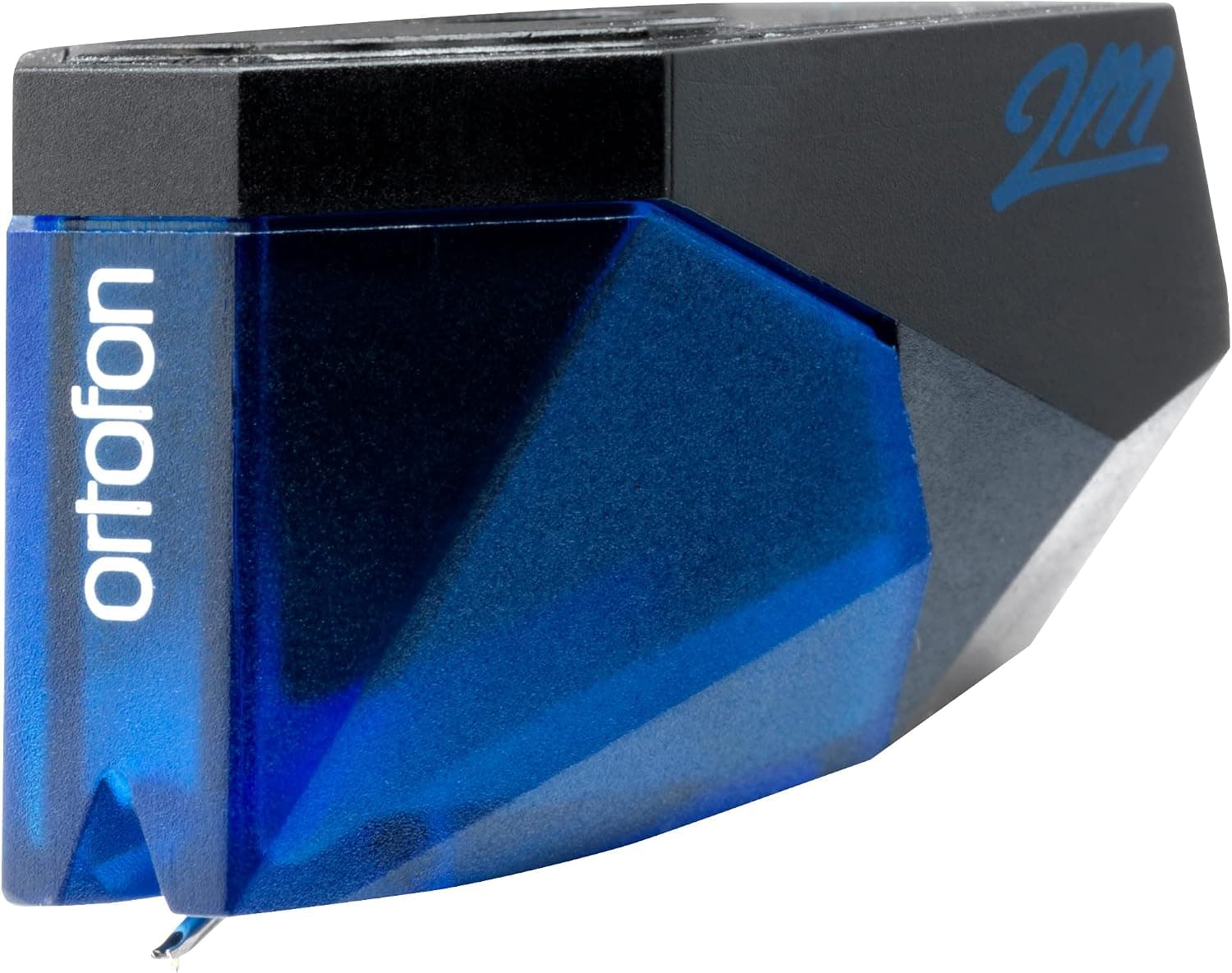
Ortofon 2M Blue moving magnet cartridge, a nude elliptical step up from the 2M Red for more refined detail.
Price range: See on Amazon
What we liked
- + Nude elliptical stylus tracks more precisely than the 2M Red's bonded tip
- + Shares its body with the 2M Red, so Red owners can upgrade by swapping the stylus
- + Balanced, detailed sound works well on mid-range turntables
Trade-offs
- - Priced noticeably above the 2M Red for a refinement rather than a leap
- - Benefits are harder to hear on budget tonearms and speakers
Where the 2M Blue sits in Ortofon's lineup
The 2M series is built around a shared cartridge body used across several models, with the differences between them mostly coming down to the stylus and internal wiring rather than a completely different design at each step. The 2M Blue sits directly above the entry-level 2M Red, using the same physical body so an owner of a Red can often upgrade simply by swapping the stylus assembly rather than buying a whole new cartridge. This shared-platform approach is part of why the 2M line has remained popular for years, since it gives a clear, affordable upgrade path as a listener's system or expectations improve, without needing to reconfigure a tonearm for a different mounting pattern or weight.
The nude elliptical stylus upgrade
The main technical difference between the 2M Blue and the 2M Red is the stylus. The Red uses a bonded elliptical tip, while the Blue steps up to a nude elliptical stylus, a construction where the diamond is mounted directly to the cantilever rather than bonded through a metal sleeve. This generally allows lower moving mass at the stylus tip, which translates into more accurate tracking of fine detail in a groove and typically a quieter, less congested sound during complex passages. Ortofon's own materials describe the Blue as adding more dynamics and resolution and sounding more open compared to the Red, and that additional detail and depth is the main reason listeners choose to pay more for this model.
Output, tracking force, and split pole pins
Like other models in the 2M range, the Blue uses Ortofon's split pole pin design, an engineering approach that allows a moving magnet cartridge to achieve a flatter frequency response closer to what is normally associated with moving coil cartridges, without the higher cost or lower output voltage that moving coil designs usually carry. Output voltage is rated at 5.5 millivolts at 1 kilohertz, a healthy output level that works with standard moving magnet phono inputs without needing extra gain. Recommended tracking force sits at 1.8 grams, within a usable range of 1.6 to 2.0 grams, giving some room to fine-tune tracking for a specific tonearm and record condition without needing specialized tools.
Where the benefits are easiest to hear
The refinements in the 2M Blue over the 2M Red are real, but they are also more subtle than jumping to a higher-tier cartridge like the 2M Bronze or 2M Black. On a budget turntable with a basic tonearm and modest speakers, some of that added resolution and openness can be harder to distinguish clearly from the Red's performance. The Blue tends to make the most sense as an upgrade on a turntable with a reasonably capable tonearm and a system downstream that can resolve the extra detail, rather than as a first cartridge on an entry-level deck where the improvement may be less noticeable. Listeners upgrading from a Red who already know their system well are in the best position to judge whether the step up is worthwhile for them.
Who should buy the 2M Blue
This cartridge fits a listener who already owns or is buying a mid-range turntable with a tonearm capable of resolving extra detail, and who wants a clear step up from an entry-level moving magnet cartridge without moving into moving coil territory and its added cost and setup complexity. It is a sensible middle ground for someone who wants more than a basic cartridge delivers but is not yet ready to invest in the 2M Bronze or 2M Black. Buyers on a tighter budget, or those using a more basic turntable and tonearm where the extra resolution is less audible, may get better value starting with the 2M Red and upgrading the stylus later once the rest of their system catches up.
Frequently asked questions
What is the difference between the Ortofon 2M Blue and 2M Red?
They share the same cartridge body, but the Blue uses a nude elliptical stylus instead of the Red's bonded elliptical tip, giving more detail and a more open sound.
What tracking force does the 2M Blue need?
The recommended tracking force is 1.8 grams, with a usable range of 1.6 to 2.0 grams depending on the tonearm and setup.
Can I upgrade a 2M Red to a 2M Blue without buying a new cartridge?
In many cases yes, since the 2M Blue shares its body with the 2M Red, so replacing just the stylus assembly can achieve the upgrade.
Is the 2M Blue a moving magnet or moving coil cartridge?
It is a moving magnet cartridge that uses Ortofon's split pole pin design to approach some of the frequency response characteristics associated with moving coil cartridges.
Prices change often, so check the current price and availability on Amazon.
Check price on AmazonTurntable Nest may earn a commission from the link above.