Hudson Hi-Fi Phono Cartridge Stylus Alignment Protractor Tool, High Contrast Review (2026)
Updated September 14, 2026 · Research-based review
Our verdict
A well-known name in turntable setup accessories, this high-contrast protractor uses Stevenson alignment geometry to help position a cartridge accurately. It is easy to read without a mirror, but avoiding parallax error still takes a careful eye, and a separate tool is needed for tracking force or VTA.
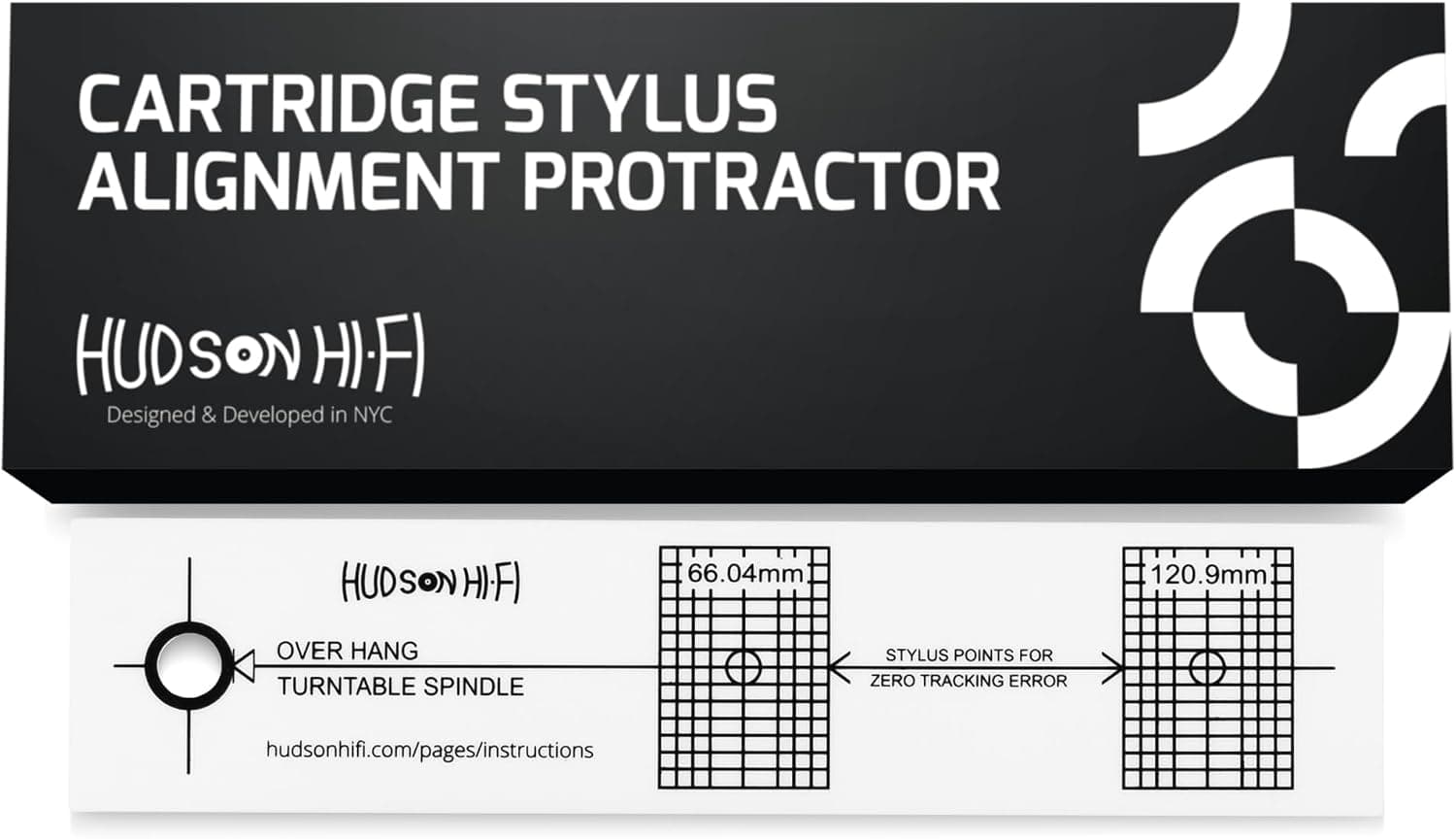
Hudson Hi-Fi high contrast phono cartridge alignment protractor, designed for easier sighting of fine alignment lines.
Price range: See on Amazon
What we liked
- + High contrast markings are easier to read than low-contrast printed grids
- + Hudson Hi-Fi is a known name in vinyl setup accessories
- + Helps set overhang and zenith angle for cleaner playback
Trade-offs
- - Without a mirror, avoiding parallax takes careful eye positioning
- - No stated alignment geometry in the product title
Who should use this protractor
This tool is for anyone mounting or remounting a cartridge on a turntable and wanting to set overhang and alignment more precisely than eyeballing it. Hudson Hi-Fi is an established name in vinyl setup accessories, and this high-contrast version is aimed at buyers who find low-contrast printed grids hard to read clearly under normal room lighting. It suits owners of turntables with S-shaped tonearms and cartridges using the standard half-inch mount, which covers most consumer decks on the market. It is a good fit for a hobbyist doing their own cartridge swaps rather than someone who prefers to have a shop handle setup, since using it correctly does take a bit of patience and a steady hand.
How the alignment geometry works
The protractor is printed with markings based on Stevenson alignment geometry, one of several standard approaches to minimizing tracking error across a record's playing surface. In use, the tool sits on the turntable platter with its center hole placed over the spindle, and the cartridge and tonearm are moved until the stylus rests exactly on the bullseye reference point while the cantilever lines up with the printed grid lines. This process checks and adjusts overhang, how far the stylus sits from the spindle, and offset angle, both of which affect how accurately the stylus traces the groove across the full width of a record rather than just near its outer or inner edges.
Setup and everyday use
Because this version uses high-contrast printed markings rather than a mirrored surface, sighting the stylus against the grid takes a careful, consistent eye position to avoid parallax error, viewing from an angle rather than straight down can make the stylus appear misaligned when it is not. A separate VTA, or vertical tracking angle, adjustment tool is sold separately and is not included, so this protractor covers overhang and offset angle only, not arm height. Setup instructions and the alignment markings are printed directly on the tool itself, which keeps the process self-contained without needing to reference an outside manual during the adjustment.
How it compares with other alignment tools
Against the VCC Mirrored Alignment Protractor, which uses a mirror surface specifically to reduce parallax error using Baerwald geometry rather than Stevenson, this Hudson Hi-Fi tool trades some of that parallax protection for higher-contrast, easier-to-read markings. Compared with the Turntable Lab protractor, also mirrored, the choice between the two often comes down to whether a buyer prioritizes contrast for visibility or a mirror for precision, since both are respected names in this category. Buyers who already struggle to see faint printed lines in typical room lighting may find the high-contrast approach more usable day to day, even if a mirrored tool offers a theoretical precision edge.
Verdict
For a turntable owner setting up or checking cartridge alignment at home, this protractor earns its our score of 8.1 out of 10 by making Stevenson-geometry alignment more readable than many low-contrast printed tools. It is a solid pick for anyone who wants clearer markings and is comfortable managing parallax by eye. Buyers who want the added precision of a mirrored surface, or who need arm height adjustment covered in the same purchase, should consider a mirrored protractor or a bundled alignment kit that includes a VTA tool alongside the protractor itself.
Frequently asked questions
What alignment geometry does this protractor use?
It is designed around Stevenson alignment geometry, one of the standard approaches for minimizing tracking error across a record.
Does it include a VTA adjustment tool?
No, vertical tracking angle adjustment is sold separately, this protractor covers overhang and offset angle only.
Does this protractor have a mirror to prevent parallax error?
No, this version uses high-contrast printed markings rather than a mirrored surface, so careful, consistent eye positioning is needed when sighting the stylus.
What cartridges and tonearms is it compatible with?
It is designed for cartridges using the standard half-inch mount on S-shaped tonearms, which covers most consumer turntables.
Prices change often, so check the current price and availability on Amazon.
Check price on AmazonTurntable Nest may earn a commission from the link above.