Turntable Phono Cartridge Stylus Alignment Protractor Tool, Mirror Review (2026)
Updated September 20, 2026 · Research-based review
Our verdict
This SPECIALTY-AV mirrored protractor is a low-cost way to check cartridge alignment after mounting a new stylus, using a mirror to help you see the cantilever squarely. It fits any half-inch mounted cartridge, but does not name a specific alignment geometry, so precision-focused owners may want a tool that states one.
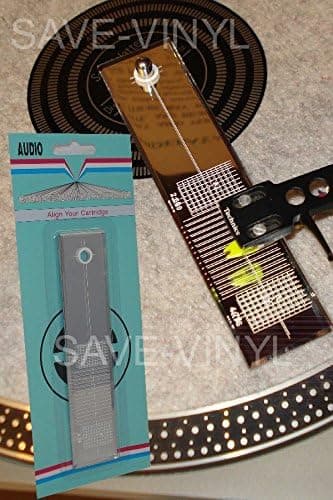
Mirrored turntable phono cartridge stylus alignment protractor, a simple tool for setting overhang and cartridge angle.
Price range: See on Amazon
What we liked
- + Mirror surface helps you line up the cantilever without parallax errors
- + Protractor lets you correct the tracking angle after mounting a new cartridge
- + Inexpensive tool pays for itself by reducing record and stylus wear
Trade-offs
- - Confirm your tonearm's alignment geometry before using this protractor
- - Needs a steady hand and good light to use accurately
Who this protractor is for
This tool is aimed at someone who has just mounted a new cartridge, or is trying to fix persistent inner-groove distortion, and needs an affordable way to double-check overhang and tracking angle without buying a premium alignment jig. It suits a home listener comfortable doing basic turntable maintenance themselves, since using any mirrored protractor correctly still takes a steady hand, decent lighting, and patience to line up the cantilever's reflection with the printed grid lines. It is not the right choice for someone who wants a single, named alignment standard spelled out on the package, since the model here focuses on general mirrored alignment rather than a specific geometry like Baerwald or Stevenson. Anyone chasing the last percentage of tracking accuracy on an expensive cartridge should look at protractors that state their geometry.
What is actually included
This is a plastic, red-colored mirrored protractor from the brand SPECIALTY-AV, model CA-001, sold as a single tool with printed directions on the back of the card. The mirror surface is meant to help you see the stylus and cantilever's reflection so you can confirm the cartridge sits square in the headshell rather than twisted at an angle, which is one of the more common alignment mistakes. It is described as compatible with any standard half-inch mounted cartridge from any brand, meaning it works with the bolt spacing used on most modern tonearms and headshells rather than being tied to one turntable brand. The package includes only the protractor itself, with no cartridge, screws, or stylus force gauge bundled in.
Using it at home
In practice, you place the protractor on the platter, lower the stylus onto one of the printed grid points, and use the mirror to check that the cantilever lines up with the printed guide while also checking your own reflection is not throwing off the angle you see. Good overhead lighting or a small flashlight helps a lot here, since a dim room makes it hard to judge exactly where the reflection lines up. Because the tool does not state which alignment geometry it follows, treat it as a general sanity check on gross alignment errors, like a badly twisted cartridge body, rather than a precision tool for optimizing tracking across the whole record surface. Recheck alignment any time you swap cartridges or headshells, since even small shifts affect tracking on inner grooves.
How it compares with other alignment tools
In the cartridge-alignment-tools ranking here, this protractor sits in the middle of an eight-item field, behind the VCC mirrored protractor that names the Baerwald standard and the Turntable Lab and Hudson Hi-Fi mirrored tools, but ahead of the Hilitand acrylic azimuth ruler and the SpinTunes protractor. The pattern among the higher-ranked rivals is that they either state a specific alignment geometry or come from a brand more focused on turntable accessories specifically, which gives buyers more confidence in the printed grid's accuracy. This tool's low price and simple mirrored design keep it competitive for basic checks, even without that extra documentation.
Bottom line
Get this protractor if you want an inexpensive way to catch obvious cartridge alignment mistakes after a stylus swap, and you are comfortable interpreting a mirrored grid without a named alignment standard spelled out for you. It scores reasonably well here for being cheap insurance against unnecessary record and stylus wear, though its build is basic and the missing geometry information holds back its features score. If you want documented precision tied to a specific alignment standard, a protractor like the VCC Baerwald tool in this same ranking is the safer pick. For casual, occasional cartridge changes, this tool does the basic job it promises.
Frequently asked questions
What alignment standard does this protractor use?
The listing does not specify a named geometry such as Baerwald or Stevenson; it is a general mirrored protractor for checking overhang and cartridge angle.
Will this fit any turntable cartridge?
It is described as compatible with any cartridge that uses the standard half-inch mounting spacing found on most tonearms and headshells.
What is included in the box?
Just the protractor itself, model CA-001, a plastic mirrored card with alignment directions printed on the back.
Do I need good lighting to use it?
Yes, clear overhead lighting makes it much easier to see the mirrored reflection of the cantilever accurately when lining it up with the printed grid.
Prices change often, so check the current price and availability on Amazon.
Check price on AmazonTurntable Nest may earn a commission from the link above.