Bookshelf Speaker Placement for Better Sound
Published How we research
Bookshelf speakers can sound remarkable, but where you put them matters as much as which ones you buy. The same pair can sound thin and vague in one spot and rich and precise in another. Placement controls bass response, imaging, and clarity, and the best part is that dialing it in costs nothing but a little experimentation. A methodical approach beats guessing, so it helps to understand what each placement variable does.
Products from this article
The highest-scoring picks from the buying guides this article links to. Scores are our editorial assessment, not customer ratings.
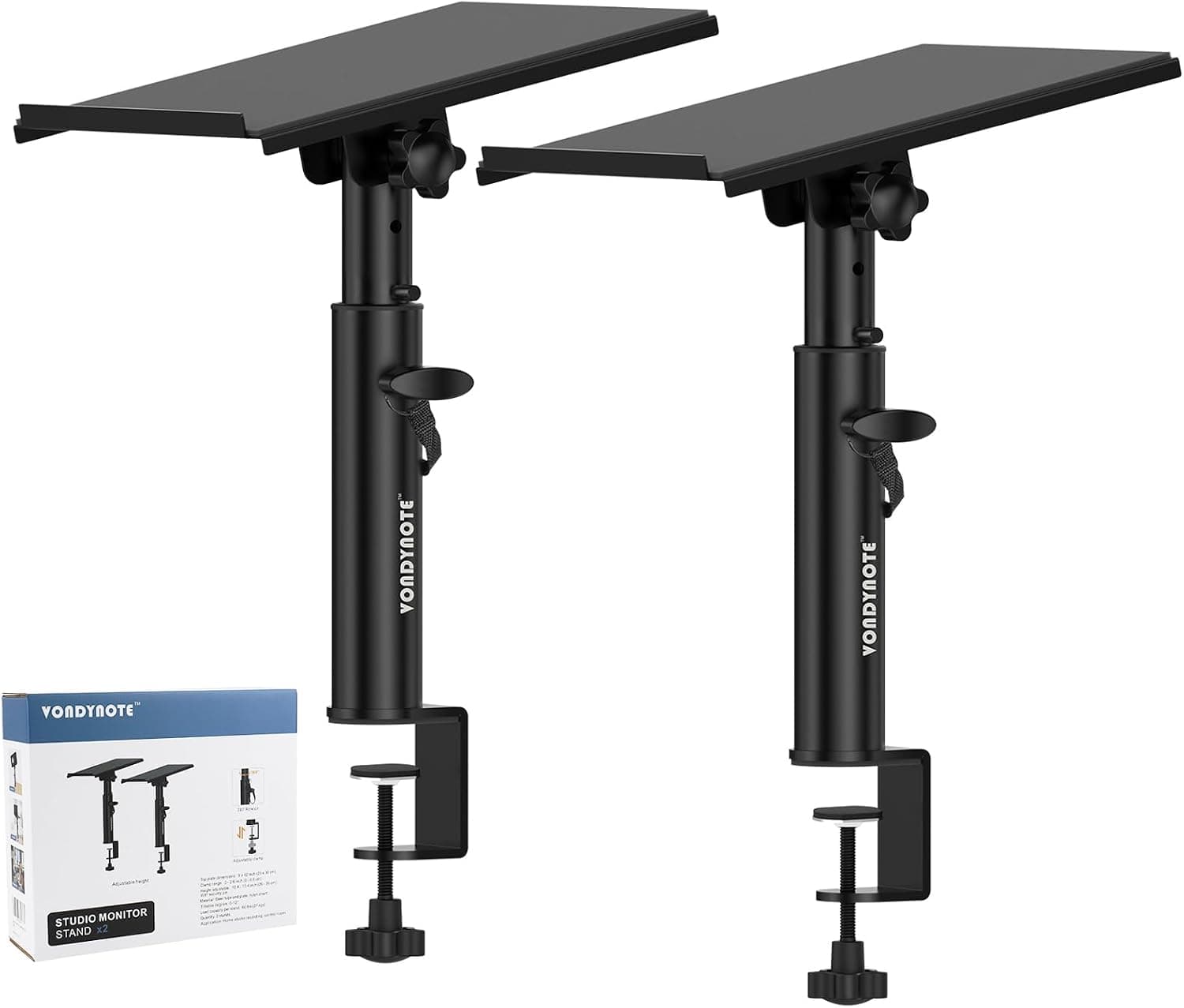
+ 80lb capacity handles large bookshelf speakers safely
From our guide: Best Speaker Stands for Vinyl (2026)
+ 66W RMS gives more room-filling sound than smaller Edifiers
From our guide: Best Powered Bookshelf Speakers for Vinyl (2026)
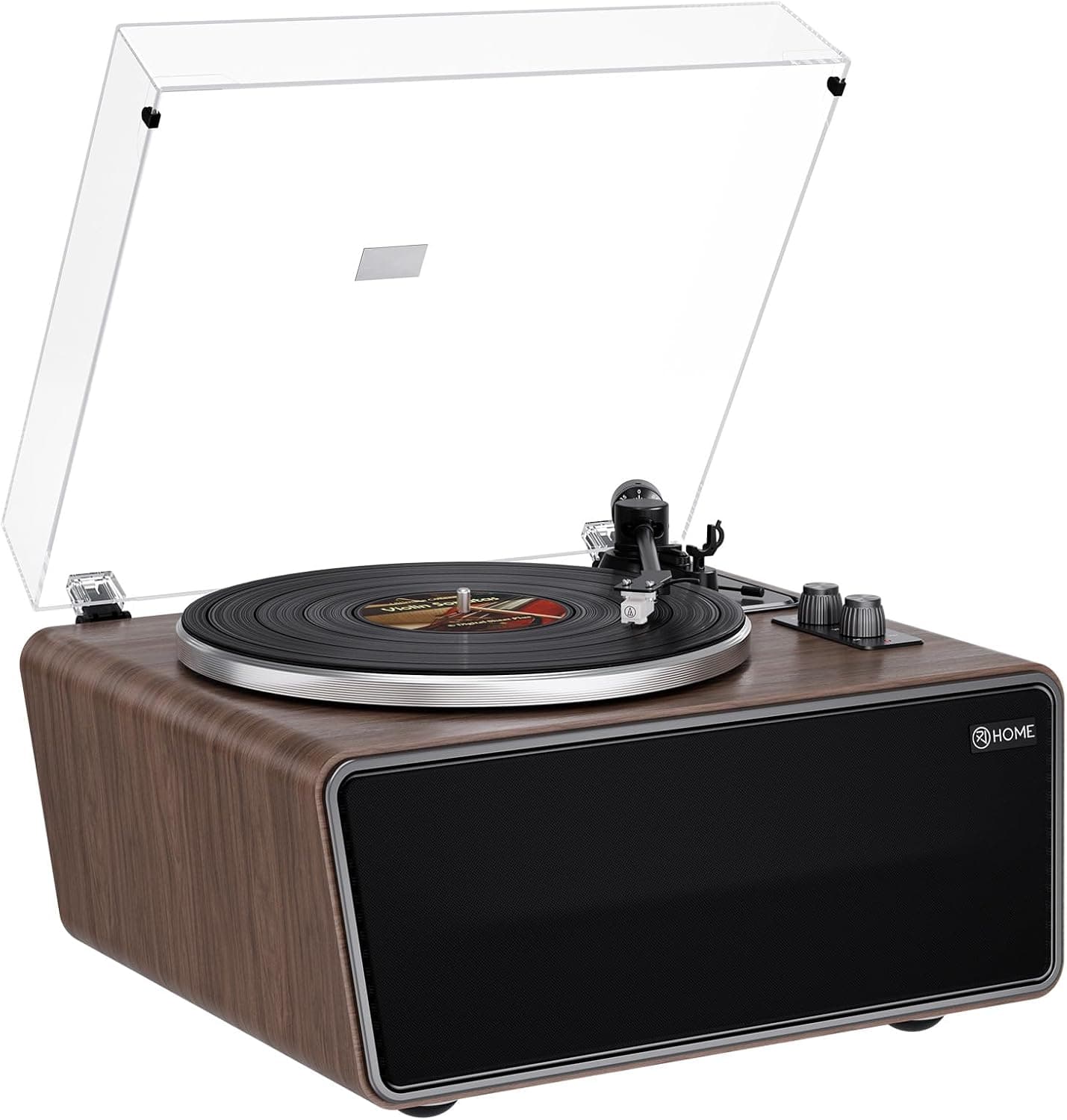
+ AT-3600L cartridge is a step up from the ceramic needles in cheap players
From our guide: Best All-in-One Record Players (2026)
+ 12 degree tilt angles tweeters toward your ears at a desk
From our guide: Best Speaker Stands for Vinyl (2026)
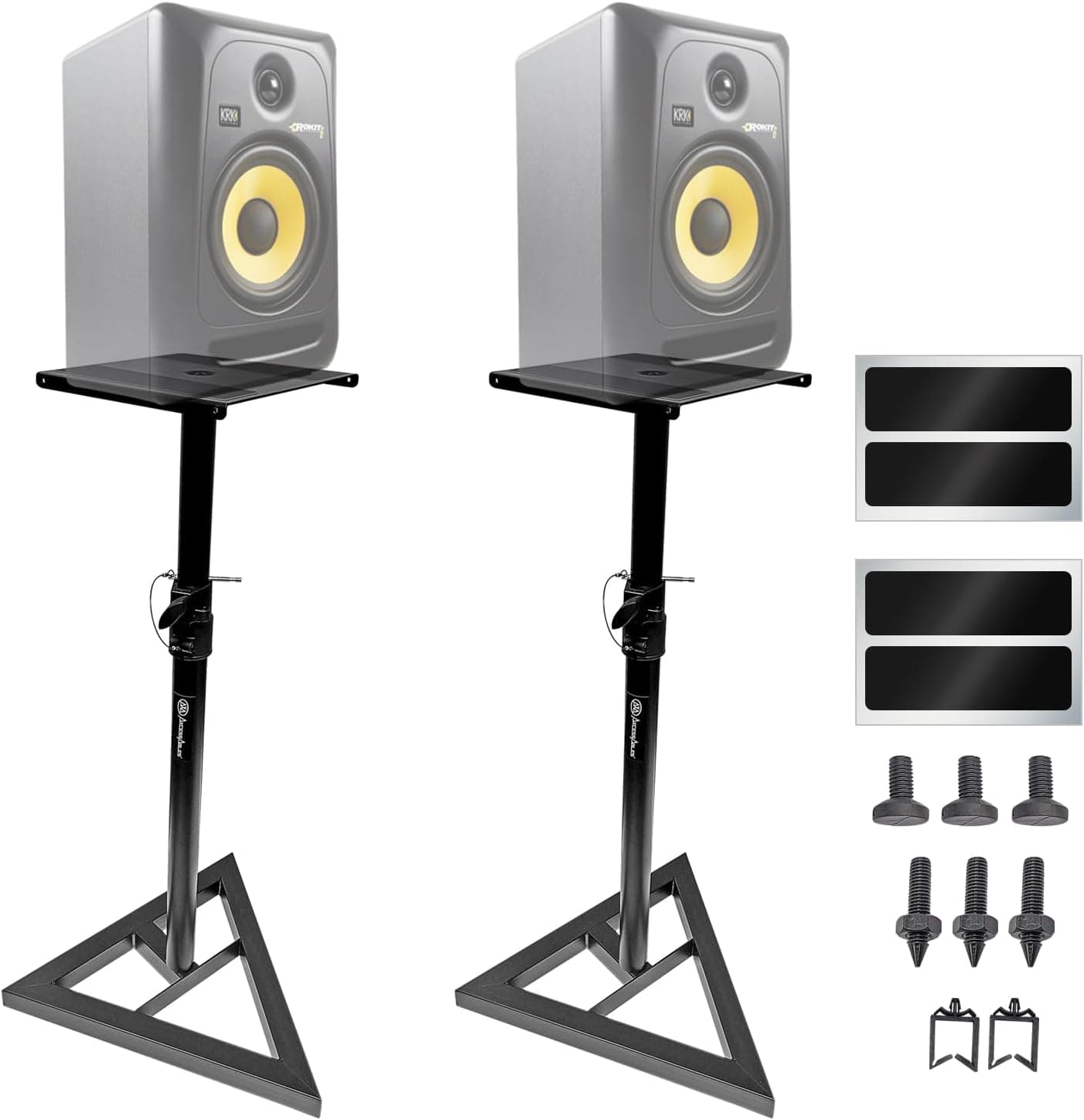
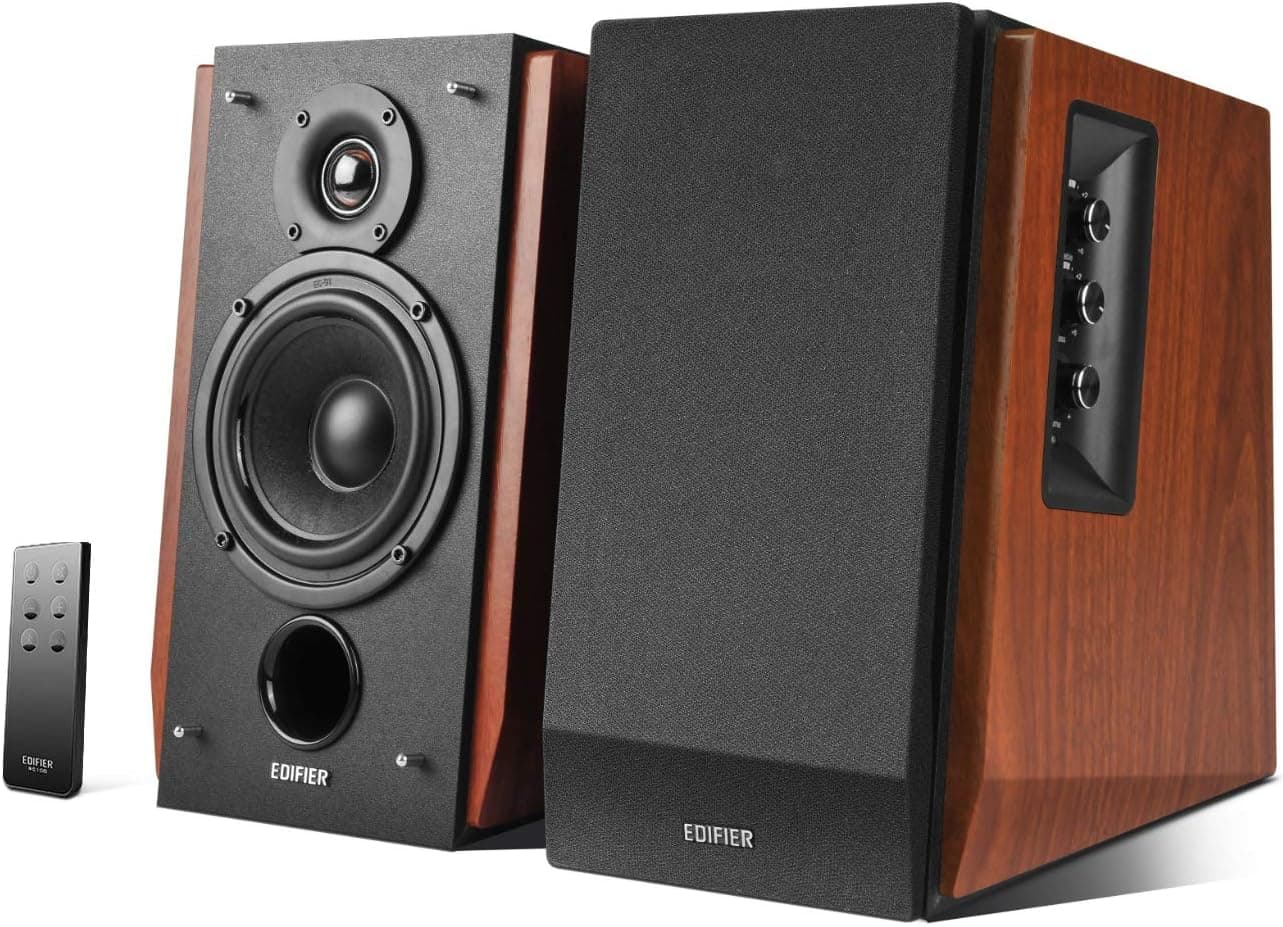
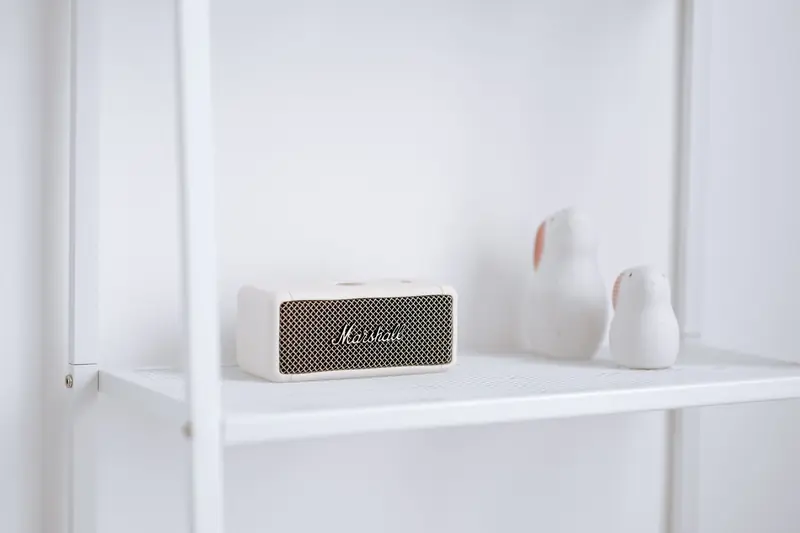
Despite the name, bookshelf speakers usually sound best on stands rather than crammed onto an actual shelf. A solid stand decouples the speaker from resonant furniture and lets you position it precisely. Placing speakers inside a bookcase or against a wall boosts and muddies the bass and smears the sound. Rigid stands filled or weighted for stability put the speaker in free space where it can perform as designed, which is a worthwhile investment.
Distance from the walls is your main tool for controlling bass. Pushing speakers close to a rear wall reinforces bass, which can help thin-sounding speakers but often creates a boomy, one-note low end. Pulling them out into the room tightens and clarifies the bass at the cost of some quantity. Corners exaggerate the effect most of all. Start with the speakers a bit out from the wall and adjust by ear until the bass sounds even rather than bloated.
Aim and height shape imaging and tonal balance. Angling the speakers inward toward the listening position, known as toe-in, sharpens the stereo image and can tame an overly bright top end depending on how much you use. Height matters too, since bookshelf speakers usually sound best with the tweeter near ear level when you are seated. Getting the tweeters to your ear height keeps the treble clear and the presentation natural.
Finally, think about the listening triangle. Ideally, the two speakers and your listening seat form roughly an equilateral triangle, with the speakers about as far apart as they are from you. Too far apart and the center of the image collapses, too close and the sound narrows. Set that triangle, fine-tune distance from the wall and toe-in, get the tweeters to ear height on good stands, and modest bookshelf speakers will reward you with sound that belies their size.
Popular right now
- How to Ground a Turntable and Eliminate HumArticle
- How to Align a Phono Cartridge for Accurate TrackingArticle
- RIAA equalization explainedGlossary
- Setting Tracking ForceArticle
- Best Stylus Cleaners for Vinyl (2026)Buying guide
- How to Fix a Turntable Playing Through Only One ChannelArticle
Based on the last 28 days of search and visitor data.