How to Operate a Record Player: Step by Step
Published How we research
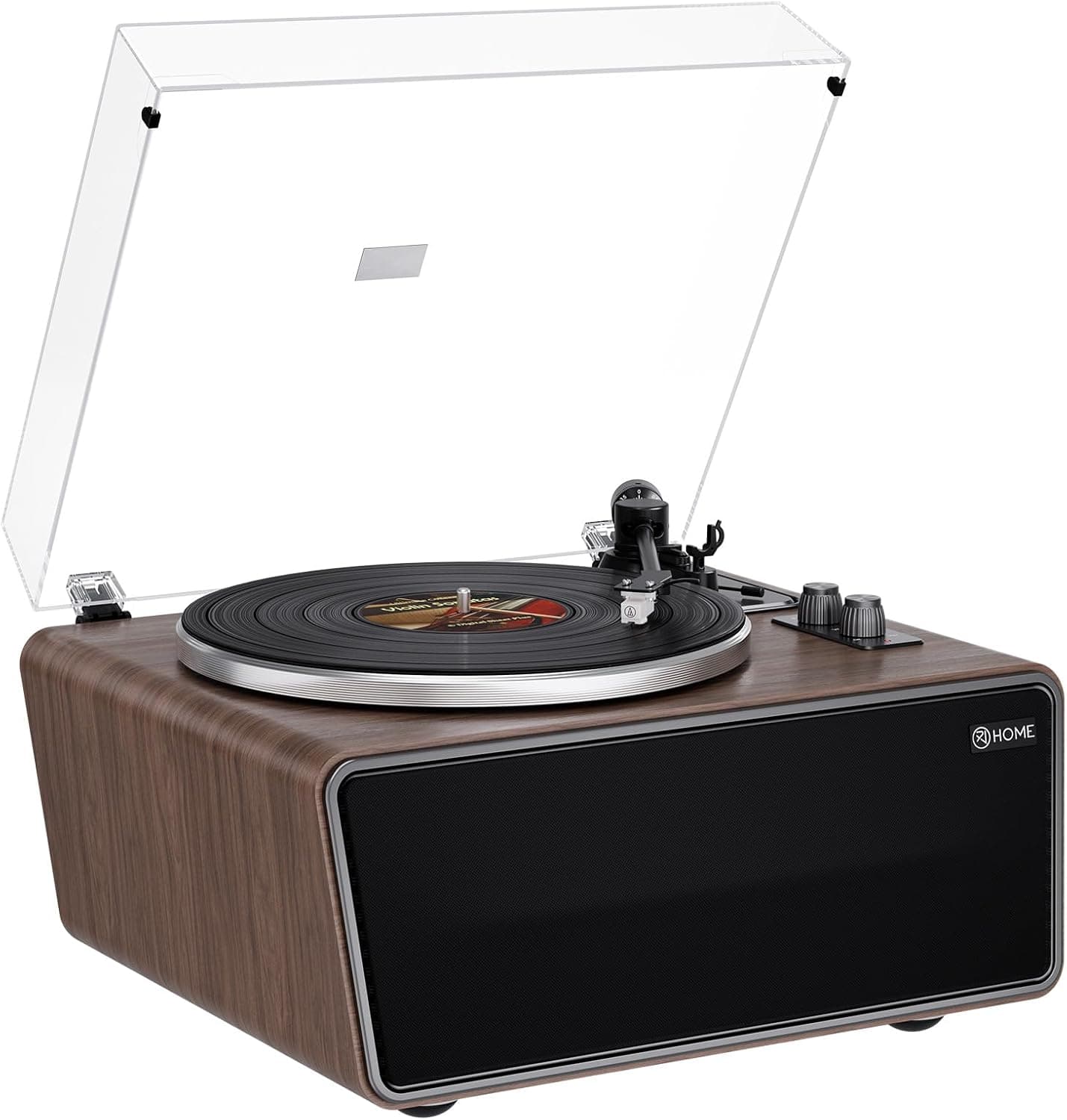
To operate a record player, put the platter on the right speed, set the record on the spindle, lift the tonearm off its rest and lower the needle gently onto the first groove. Turn the volume up slowly, and when the side ends, lift the arm and return it to the rest before you switch the motor off. The details vary between manual, automatic and suitcase models, so this guide walks through each step and points out where the types differ.
Products from this article
The highest-scoring picks from the buying guides this article links to. Scores are our editorial assessment, not customer ratings.
+ AT-3600L cartridge is a step up from the ceramic needles in cheap players
From our guide: Best All-in-One Record Players (2026)
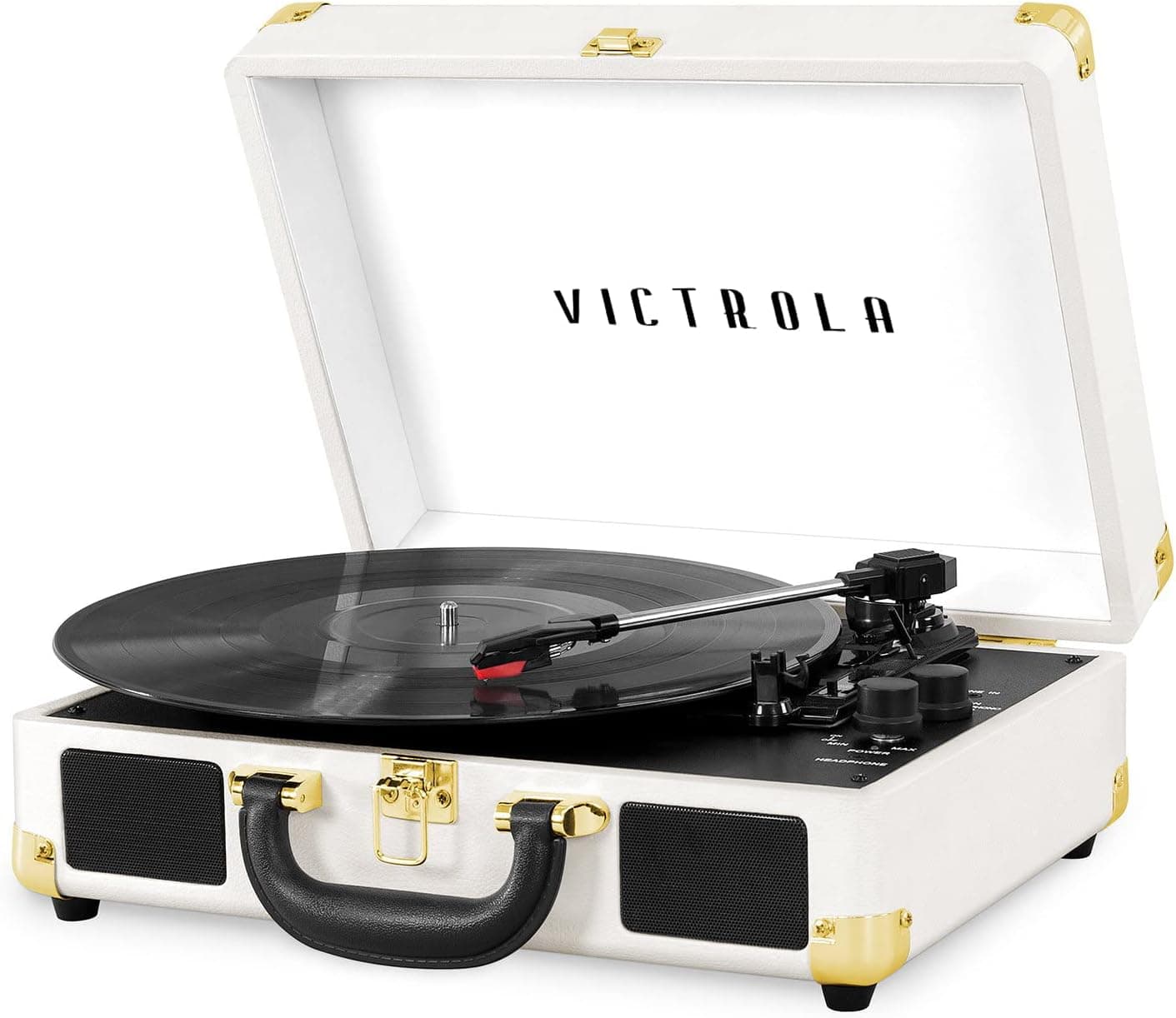
+ RCA out on the white Journey lets you graduate to proper speakers later
From our guide: Best Suitcase Record Players (2026)
+ Dense carbon fibers sweep dust from deep in the grooves
From our guide: Best Anti-Static Brushes for Vinyl (2026)
+ Fully automatic arm lowers and returns on its own for worry-free playback
From our guide: Best All-in-One Record Players (2026)


Before you start: check the setup
Put the player on a flat, stable surface away from the speakers, because bass vibration travelling through a shelf makes the needle skip and adds a muddy rumble. If the player has a dust cover, lift it or remove it for setup; most hinged covers can stay open during play on a manual deck, while the clear lids on some suitcase models are made to be closed. Check that the platter sits fully down on its spindle, and that the belt, if the deck uses one, is on the motor pulley.
If the stylus has a plastic guard on it, take it off by pulling it straight forward, away from the cartridge. Never press down on the needle itself. Then connect power and sound: built-in speaker models only need the mains cable, while a deck without speakers needs an RCA lead to an amplifier or powered speakers, and often a phono preamp in between if the amp has no phono input.
Choose the speed and place the record
Most LPs (12 inch) play at 33 1/3 RPM, and most singles (7 inch) play at 45 RPM. Older shellac records run at 78 RPM, but only some players offer that setting. The speed is selected with a switch or a lever on the plinth, and on some decks you press a button to change it. Read the record label if you are unsure, because the speed is usually printed on it. The size and speed chart on this site lists the common combinations.
Hold the record by its edges and the label, never by the playing surface, and lower it over the spindle until it rests on the platter or slipmat. For a 7 inch single with a large center hole, snap in a 45 adapter first. If the record is dusty, brush it lightly before playing, because dirt in the groove becomes noise and wears the stylus.
Start the platter and lower the needle
On a manual turntable, press the start switch or move the arm toward the record. The platter begins to turn and the arm is released from its rest. Lift the arm with the cueing lever if there is one, swing it over the lead-in groove at the outer edge of the record and lower the lever slowly. The needle drops softly into the groove and the music starts after a second or two of lead-in noise. Without a cueing lever, lift the arm by the finger lift on the headshell and set it down with a steady hand.
Automatic models do this for you: pressing start moves the arm over the record and lowers it. Some suitcase players leave the arm to you but have a cueing lever. Avoid dragging the needle across the record, and avoid setting the needle on a stopped record and then starting the motor.
Set the volume, then stop or flip the record
Turn the volume down before the needle touches the record and bring it up gradually after the music starts. Vinyl can be quieter than streaming sources, so the dial may need to sit higher than it does for other inputs; if the sound distorts or hisses at a normal level, the problem is more likely the setup than the volume. Bluetooth models send the audio to a wireless speaker the same way, with the volume then set on the speaker.
Most records run about 20 to 25 minutes a side. Near the end, the needle reaches the run-out groove and you will hear a repeating soft click. An automatic player lifts the arm and stops the platter by itself. On a manual model, lift the arm yourself, set it on the rest, secure the clip if it has one, and then stop the platter. Flip the record by its edges and repeat the steps.
Care habits that protect records and stylus
Clean the stylus with a stylus brush using a gentle back to front stroke, because dust builds up on the tip and hurts sound. Keep the dust cover down when you are not playing, return records to their inner sleeves and store them upright. Do not stack records flat or leave them in the sun.
Tracking force, the weight on the stylus, is the setting that matters most on a deck with an adjustable counterweight. Many suitcase tonearms have no adjustment at all, so you cannot change the force. If you play records you care about, a manual deck with an adjustable arm is a better long-term choice. When the sound turns distorted or noisy, check whether the stylus is worn before assuming the record is at fault.
Frequently asked questions
Why is there no sound when the record spins? Built-in speaker models usually have a volume knob and a function switch to check first. A deck without speakers needs an amplifier or powered speakers, and an amp without a phono input needs a phono preamp between the two. Also confirm the RCA cables are plugged into the right input.
Can I leave the player running after the record ends? No. On a manual deck the needle sits in the run-out groove and keeps wearing it, so lift the arm and stop the platter. Automatic players do it themselves, but still take the record off and cover the deck afterward.
Which side of the record do I play first? Side A or side 1 normally comes first, and the label says which. Many records have both sides in use, so flip the disc when the first side ends.
Do I need to clean a new record? New records usually carry some dust and static from the sleeve. A quick pass with an anti-static brush before each play is enough for most collections; a deeper wet clean is useful for used records.
Popular right now
- How to Ground a Turntable and Eliminate HumArticle
- How to Align a Phono Cartridge for Accurate TrackingArticle
- RIAA equalization explainedGlossary
- Setting Tracking ForceArticle
- Best Stylus Cleaners for Vinyl (2026)Buying guide
- How to Fix a Turntable Playing Through Only One ChannelArticle
Based on the last 28 days of search and visitor data.