How to Fix Turntable Speed and Pitch Problems
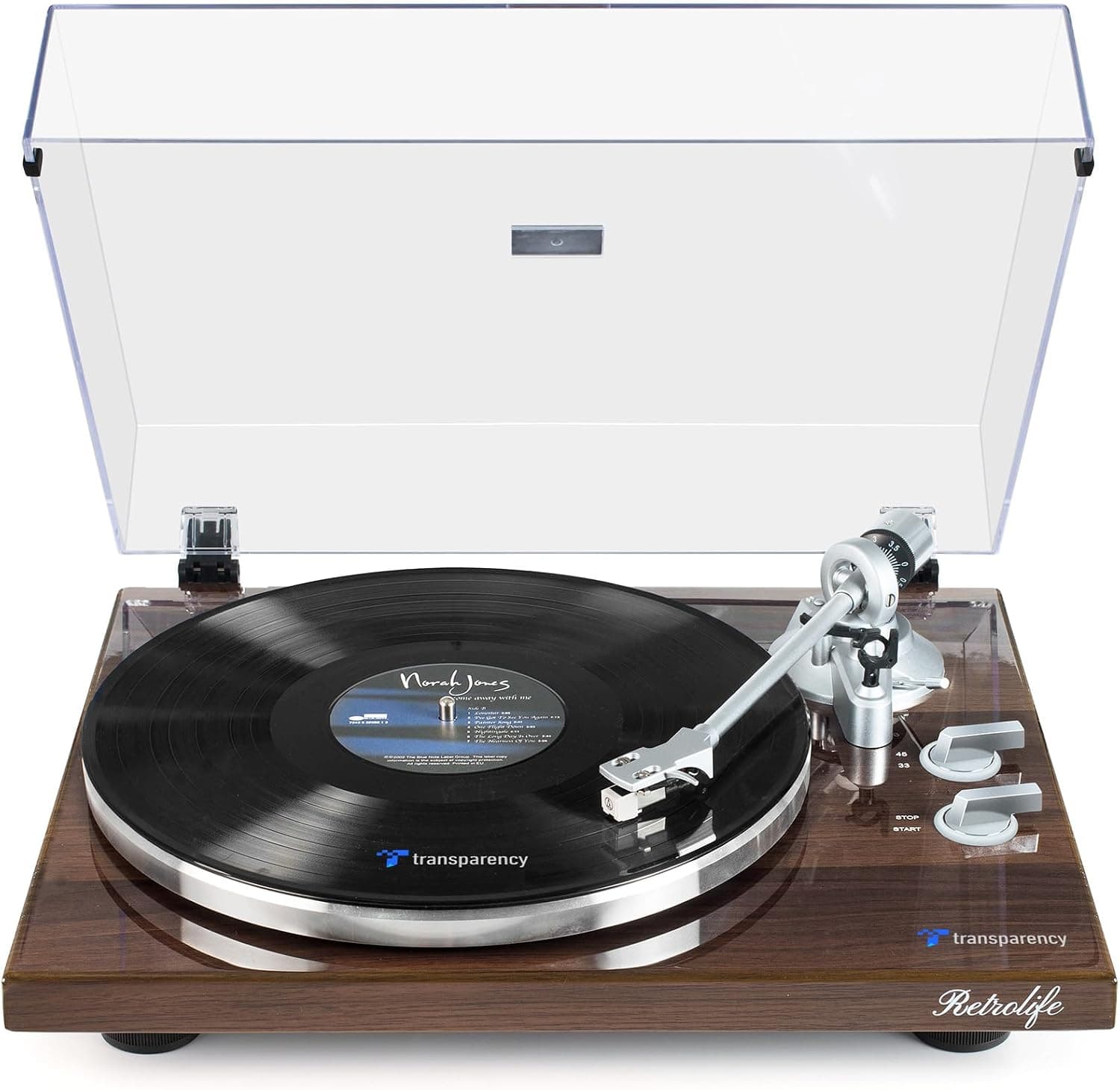
A turntable spinning at the wrong speed makes songs sound off-key, sluggish or chipmunk-like, while unstable speed causes wavering pitch called wow and flutter. Many speed issues are simple, such as the wrong speed setting or a slipping belt, while others need adjustment or parts. Checking in a logical order helps you find the cause.
Check the speed setting
Most LPs play at 33 1/3 RPM and most 7-inch singles at 45 RPM, but there are exceptions, including 12-inch singles cut at 45 RPM and older 78 RPM records. Check the record label or sleeve for the correct speed.
On some belt-drive turntables, changing speed requires moving the belt to a different pulley step under the platter. If the belt is on the wrong step, the record plays at the wrong speed even if a switch appears correct.
Inspect the belt
Belts stretch, dry out and lose grip with age, causing slow speed, slow start-up and pitch wavering. A shiny, loose or cracked belt usually needs replacing.
Clean the belt, motor pulley and platter rim with a lint-free cloth and a little isopropyl alcohol where appropriate, since oil and dust reduce grip. Make sure the belt is not twisted and sits correctly on the pulley.
Measure speed accurately
A strobe disc with a strobe light or a smartphone speed app placed on the platter shows whether the turntable runs at the correct speed. Many turntables have built-in strobe markings on the platter edge.
Test with the stylus lowered onto a record, since stylus drag slightly affects speed. Compare readings at the start and end of a record to spot speed drift.
Adjust pitch and speed controls
Direct-drive and DJ turntables often have a pitch slider or quartz lock. Set the pitch control to zero or enable quartz lock for accurate playback.
Some belt-drive turntables have small speed adjustment screws or potentiometers accessible under the platter or base. Follow the manufacturer's instructions and adjust in small increments while monitoring with a strobe.
Check bearings and motor
A dry or dirty platter bearing adds friction, causing slow speed and noise. Some turntables need a drop of the recommended bearing oil periodically, while others use sealed bearings.
If the platter spins freely by hand but speed remains unstable with a new belt, the motor or electronics may be failing. Vintage turntables often benefit from professional servicing.