How to Clean a Turntable: A Safe Routine for the Plinth, Platter, Mat and Dust Cover
Published How we research
A turntable collects dust quickly, and that dust ends up on your records and your stylus. A quick routine keeps the deck looking good and helps your records stay cleaner. The risk is cleaning too hard or using the wrong product near the stylus, motor or belt. This guide goes through the parts in a safe order, says what to avoid and suggests how often to do it.
Products from this article
The highest-scoring picks from the buying guides this article links to. Scores are our editorial assessment, not customer ratings.
As an Amazon Associate we earn from qualifying purchases. This does not change our picks. Affiliate disclosure
New to Prime? Try Prime free for fast, free shipping on eligible items.
+ Hinged design lifts open without removing the whole lid
From our guide: Best Turntable Dust Covers for Vinyl (2026)
+ Cork and rubber blend damps vibration better than thin felt
From our guide: Best Turntable Platter Mats
+ Reusable gel bubble can be rinsed and used many times
From our guide: Best Stylus Cleaners for Vinyl (2026)
+ Dense carbon fibers sweep dust from deep in the grooves
From our guide: Best Anti-Static Brushes for Vinyl (2026)
Prepare before you start
Switch the turntable off and unplug it from power. Remove the record, lock or clip the tonearm in its rest and take off the platter mat. If your turntable has a removable headshell, leave it in place unless you know how to handle it, and take care near the stylus, which is small and delicate.
Gather a soft microfiber cloth, a soft brush such as a clean paintbrush or an anti-static brush and a small amount of water or a cleaner recommended for the finish of your turntable. Avoid paper towels, which can leave fibers, and avoid sprays aimed directly at the deck.
Dust cover and plinth
Wipe the dust cover with a slightly damp microfiber cloth, then buff it dry. Clear plastic scratches easily, so avoid rough fabric and strong solvents, which can cloud or crack acrylic. Check the manual for a cleaning note, since some covers are treated with coatings.
For the plinth, wipe the surface with a barely damp cloth and dry it straight away. Never pour or spray liquid on the turntable. Wood veneer and painted finishes may need different care, so check the maker's advice. Keep moisture away from switches, sockets and the motor opening.
Platter and mat
Lift off the platter if it is designed to be removed and follow the manual, because belt drive models often have a belt around a sub platter or motor pulley. Do not stretch or handle the belt more than needed, and put the platter back carefully so the belt stays seated.
Wipe the platter with a damp cloth and dry it. Clean the mat according to its material: felt can be brushed or lightly lint rolled, rubber can be wiped with a damp cloth and cork can be brushed. A dirty mat transfers dust to your records, so it is worth cleaning regularly.
Tonearm, headshell and stylus
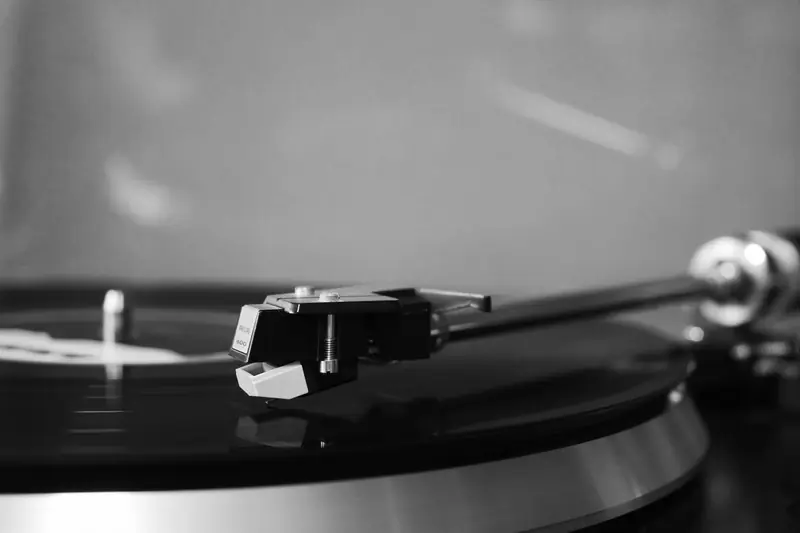
Be gentle here. Wipe the tonearm tube and headshell with a dry or barely damp cloth, supporting the arm with one hand so you do not bend it. Do not press down on the cartridge or stylus. If you need to clean the stylus, use a soft stylus brush and move it from back to front, in the direction of the record's travel.
Stylus cleaning liquids exist, but follow the product instructions and use only a tiny amount. Many people stick to a dry brush for routine care and use a liquid only occasionally. Our stylus cleaning guide covers the safe method in more detail.
Feet, ports and cables
Dust builds up around the rubber feet and the back panel. Use a soft brush to loosen dust and a dry cloth to wipe it away. If your cables look dusty, brush them rather than rubbing, and check connections are snug while you have the deck unplugged.
A small handheld vacuum or compressed air can lift dust from corners, but keep air pressure low and the nozzle away from the stylus and tonearm. A strong blast of air can force dust into the motor or bearing, and some makers advise against it.
Belt, motor and moving parts
On belt drive models, the belt can collect dust and oils from handling. If it looks dirty, wipe it very gently with a dry lint free cloth, and replace it if it is stretched, cracked or slippery. Our belt guide explains the signs and the steps.
On direct drive models, the motor sits under the platter and needs little cleaning beyond keeping dust out. Do not push tools into vents or bearings. If the platter feels rough or the speed wanders, have the unit checked rather than lubricating it yourself, unless the manual describes a procedure.
What to avoid
Do not use household glass cleaners, harsh solvents or abrasive pads on the plastic or finish. Do not oil the motor or bearing unless the manual tells you to, and use only the lubricant it names. Never run the turntable while you clean it, and do not spray anything near the stylus or cartridge.
If the turntable has electrical issues, unusual smells or damaged cords, stop and have it checked by a qualified repairer rather than opening it yourself. Keep liquids away from electronics and do not clean while the unit is plugged in.
Put it back together and test
Refit the platter and mat, check that the belt sits properly if your model has one and make sure the platter turns freely by hand. Lower the tonearm clip, plug the turntable in and play a record you know well. Listen for unusual noise, speed changes or hum that was not there before.
If something sounds different, switch off and recheck what you moved. Common slips are a mat put on upside down, a belt that has slipped off its pulley or a cable that was loosened while you cleaned. Fixing these is usually quick when you catch them early.
How often to clean
A quick brush of the record and stylus before playing and a wipe of the dust cover each week or two is plenty for many homes. A deeper clean of the platter, mat and plinth every month or two is reasonable if the deck sits in a dusty room, and more often if you have pets or work nearby.
Keeping the dust cover closed while the turntable is not in use is the easiest habit for keeping the deck clean. Some people lift it only when changing records and close it again while playing, though advice varies, so check the manual for your model.
Popular right now
- How to Ground a Turntable and Eliminate HumArticle
- How to Align a Phono Cartridge for Accurate TrackingArticle
- RIAA equalization explainedGlossary
- Setting Tracking ForceArticle
- Best Stylus Cleaners for Vinyl (2026)Buying guide
- How to Fix a Turntable Playing Through Only One ChannelArticle
Based on the last 28 days of search and visitor data.